The 12th Art: Why Watchmaking, Jewellery, Fine Jewellery, and Silversmithing Deserve to Be Recognized as Art
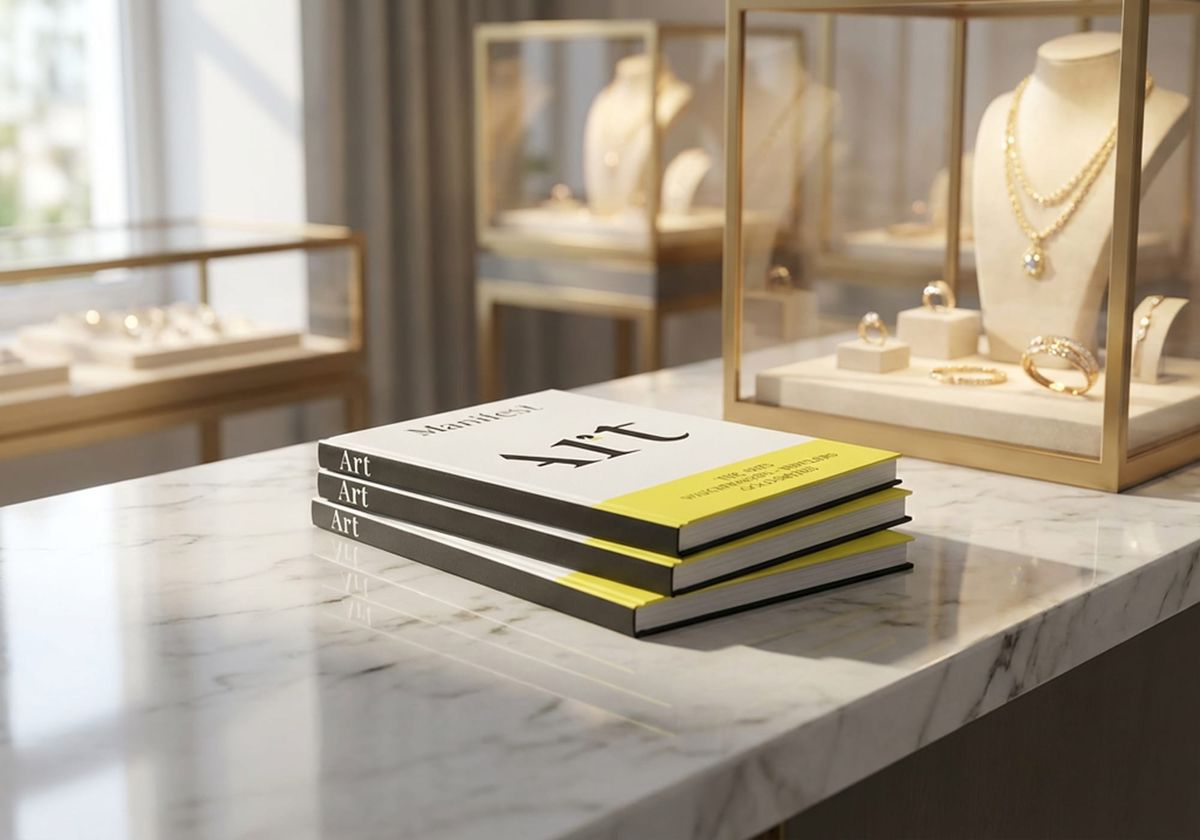
For centuries, these disciplines have been admired for their mastery, rarity, and heritage. Perhaps it is time to recognize something more clearly: they are not only exceptional crafts — they are also art forms.
What if some of the most refined forms of human creation have been hiding in plain sight — admired, collected, transmitted, and celebrated — yet never fully named for what they truly are?
Watchmaking, jewellery, fine jewellery, and silversmithing are usually described through the language of craftsmanship, luxury, heritage, and technical excellence. These descriptions are not wrong. On the contrary, they capture something essential: the mastery, patience, discipline, and transmission these fields demand.
But they remain incomplete.
They explain how these disciplines are made.
They do not fully explain what they are.
At their highest level, these practices do more than demonstrate skill. They shape matter into form, and form into meaning. They engage authorship, symbolism, composition, proportion, and aesthetic intention. They produce works that may be worn, handled, or used, yet whose significance goes far beyond function.
A finely crafted watch is not only an instrument of time.
A jewel is not only an ornament.
A silver object is not only a crafted piece.
Each can also be understood as a work of art.
This is the conviction at the heart of what may be called the 12th Art.
The beginning of an idea
The origins of this idea go back to 2011, when an initial intuition began to take shape: that watchmaking, jewellery, fine jewellery, and silversmithing occupied a place that had never been fully articulated within the traditional classification of the arts.
The issue was never to invent an artificial category for the sake of novelty. It was to address a cultural blind spot.
These disciplines had long been recognized for their craftsmanship, technical refinement, historical prestige, and association with luxury. Yet their artistic dimension often remained implicit, as though it were understood intuitively but never clearly formulated. They were admired, certainly — but not always interpreted through the full lens of art.
That gap in language mattered. Because what is not clearly named is rarely fully recognized.
From intuition to manifesto
The first major expression of this idea came through the Manifesto of the 12th Art.
The manifesto gave written form to the original conviction. It proposed that watchmaking, jewellery, fine jewellery, and silversmithing should not be confined to the categories of craft, applied arts, luxury, or heritage alone. It argued that these disciplines also belong to the realm of art, because they express far more than utility or technical performance.
The manifesto was not simply a declaration. It was a conceptual step. It sought to make visible something that had too often remained culturally underdefined.
And as with many meaningful ideas, the first formulation was not the final one.
A reflection that matured over time
As the years passed, the concept continued to deepen. What began as an intuition required historical perspective, cultural grounding, and sharper articulation. The relationship between these disciplines and the worlds of art, decorative arts, applied arts, craftsmanship, and luxury needed to be examined more thoroughly. The question was not simply whether they could be admired artistically, but how they should be understood within a broader cultural framework.
This led to an updated version of the Manifesto, reflecting a more mature and structured body of thought.
Later, that reflection expanded further through the Historical Booklet of the 12th Art, which offered deeper context and a wider intellectual horizon. If the manifesto was the founding statement, the booklet became a way of tracing the roots, development, and legitimacy of the idea over time.
Together, these stages form a coherent trajectory: an intuition, a manifesto, an updated manifesto, and then a broader historical framing.
What emerges from that trajectory is not an invented concept seeking legitimacy after the fact. It is a recognition process seeking to express, with increasing clarity, something that has long existed.
Why recognition matters
To say that these disciplines are art is not a matter of prestige.
It is a matter of clarity.
Recognition changes perception. It influences how a discipline is studied, curated, preserved, transmitted, and discussed. It shapes its place within education, institutions, cultural discourse, and the broader public imagination.
When something is understood as art, it is no longer seen only through function, market value, rarity, technical complexity, or heritage. It is granted another horizon — one in which meaning, expression, authorship, form, and cultural significance become central.
For too long, watchmaking, jewellery, fine jewellery, and silversmithing have often been interpreted through partial categories. Their technical excellence is recognized. Their luxury status is recognized. Their craftsmanship is recognized.
Yet their artistic identity is still too often treated as secondary, even when it lies at the very heart of their creation.
The concept of the 12th Art offers a more complete reading.
A shared world of form, time, and beauty
One of the strengths of the 12th Art is that it brings unity to disciplines that are often considered separately.
Watchmaking, jewellery, fine jewellery, and silversmithing share more than techniques or precious materials. They share a common relationship to time, matter, discipline, transmission, and beauty. They are rooted in patience, precision, and intention. They require not only mastery of execution, but also depth of vision.
They belong to a shared cultural territory.
And in a world increasingly shaped by speed, immediacy, and disposability, that territory feels especially meaningful. These disciplines embody another rhythm — one in which excellence requires time, meaning is built through attention, and beauty is inseparable from care.
This is what makes the 12th Art not only a cultural proposition, but also a timely one.
It invites us to rethink luxury itself — not as display, but as depth; not as instant effect, but as continuity; not as consumption, but as cultivated meaning.
The role of InnovART
Today, this reflection is not carried forward in isolation.
Based in the Grand Duchy of Luxembourg, InnovART stands among the driving forces supporting the recognition of the 12th Art, with a team deeply committed to the cultural and artistic significance of watchmaking, jewellery, fine jewellery, and silversmithing.
Its role is not merely to promote an idea, but to help give it structure, continuity, and visibility. In that sense, they contribute to framing the recognition of the 12th Art not as a passing slogan, but as a long-term cultural proposition.
What gives this initiative weight is precisely that it comes from within these worlds rather than from outside them. It is rooted in a deep attachment to artistic heritage, to transmission, to excellence, and to the enduring meaning of these disciplines.
Behind the recognition of the 12th Art is not a simple branding exercise, nor an attempt to manufacture prestige. It is a more serious effort: to articulate, with greater clarity, the artistic dimension of practices that have too often been admired without being fully understood.
That effort is sustained by people for whom watchmaking, jewellery, fine jewellery, and silversmithing are not merely sectors or markets, but living cultural expressions worthy of deeper recognition.
Readers who wish to explore the broader vision behind this reflection can learn more at InnovART and 12 Art.
A recognition whose time has come
What began in 2011 as an intuition became a manifesto.
What was first stated in the manifesto was later revisited and refined.
What was refined found broader grounding in the Historical Booklet.
What was once a personal conviction has gradually become a structured and supported cultural initiative.
The 12th Art does not ask us to invent something new.
It asks us to see more clearly what has long been there.
Watchmaking, jewellery, fine jewellery, and silversmithing belong not only to the worlds of craft, luxury, and heritage. They also belong to the world of art.
And perhaps they always did.
To follow the ongoing reflection and access further material, readers may also consult 12art.org and innovart.lu.
The 12th Art does not ask to be invented. It asks to be recognized.
